The Compact Wallet: How to Choose One That Actually Works
Most of us carry a wallet every day, yet few of us think carefully about choosing one. We keep using whatever came to hand, even as it grows thick with receipts, expired cards and loyalty schemes we no longer use. A compact wallet is a chance to start again: a smaller, better-organised carrier that holds what you genuinely need and nothing more. Done well, it makes your pocket lighter, your cards easier to find, and your daily routine a little smoother.
This guide explains what to look for, from size and layout to materials and security, so you can choose a wallet that fits your life rather than fighting against it.
Why Go Compact
The case for a small wallet starts with comfort. A bulky wallet in a back pocket is uncomfortable to sit on and can distort the shape of a jacket or trousers. In a front pocket or a small bag, it takes up space that could be used for something else. A slim wallet sits flat, weighs less, and is easier to carry without noticing it.
There is also an organisational benefit. A compact wallet forces you to decide what you actually need. Most people carry cards they have not used in months, receipts for purchases long forgotten, and membership cards for places they rarely visit. Clearing those out and keeping only the essentials means the cards you do need are always easy to find, rather than buried in a stack.
How Many Cards Do You Really Carry
Before choosing, count what you actually use. Most people need a payment card or two, an identity card, a driving licence, and perhaps one or two membership cards. That is usually between four and eight cards, and a good compact wallet is designed around exactly that number.
Card slots should hold cards snugly without making them hard to remove. Slots that are too tight will stretch and wear; slots that are too loose let cards slip out. The best designs use a combination of full-length slots for the cards you use most and a quick-access slot or pocket for the card you reach for several times a day.
Materials That Last
Leather is the traditional choice, and it remains hard to beat. Good quality leather is durable, ages gracefully, and feels pleasant to handle. Full-grain leather develops a patina over time and resists wear, while top-grain leather offers a smooth, uniform finish at a lower price. Cheaper bonded or corrected leathers may look good initially, but they tend to crack and peel at the edges after a year or two of daily use.
The stitching matters as much as the leather. Look for tight, even stitching along the edges and around the card slots, since these are the points that take the most strain. A wallet with neatly finished edges is less likely to fray, and one with reinforced corners will keep its shape longer.
Alternative materials have their place too. Fabric wallets are light and often very slim, though they show dirt more readily. Metal card holders are extremely thin and offer good protection for the cards, but they hold fewer items and do not suit people who carry cash. Some modern designs combine materials, using a leather exterior with a metal interior frame, or a fabric body with leather trim. The right choice depends on how much you carry and how you like a wallet to feel in the hand.
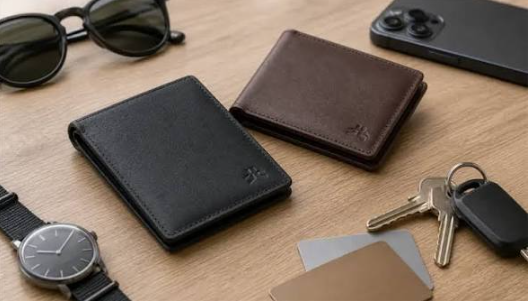
When you want to see the range of sizes, layouts and finishes available, browsing one collection shows how much variety exists even among compact designs.
Layouts Worth Considering
The classic bifold folds in half and usually holds six to ten cards plus banknotes. It is the most familiar layout and suits people who want a traditional wallet in a smaller form. The card holder, by contrast, is a flat sleeve with slots on each side and no folding section; it holds a handful of cards and a few folded notes, and it is the slimmest option available.
Some designs include a pull-tab or thumb slot that pushes the cards up for easy access, which is a thoughtful detail if you use the same card several times a day. Others include a separate compartment for a travel card or a work pass, so it can be tapped without opening the wallet. These small features make a surprising difference in daily use, and they are worth looking for.
Frequently Asked Questions
1. How many cards should a compact wallet hold?
Most compact designs hold between four and ten cards comfortably. The right number depends on your daily life, but if you regularly carry more than ten cards, a compact wallet may not suit you unless you are willing to leave some cards at home. Count the cards you genuinely use each week and choose a wallet built around that number.
2. Will a slim wallet protect my cards?
Yes, provided the slots hold the cards snugly and the wallet is made from a sturdy material. Cards are most at risk when they slide around loosely or when the wallet is overstuffed, which bends them. A well-made compact wallet that fits its contents properly protects cards at least as well as a larger one.
3. Is leather still the best material for a wallet?
For most people, yes. Good quality leather is durable, comfortable to handle and ages well, and it is available in a wide range of finishes. Fabric and metal alternatives suit particular needs, such as extreme slimness, but leather remains the most versatile choice for a wallet that will be used every day for years.
Conclusion
A compact wallet is a small change that makes daily life noticeably easier. By carrying only what you need, choosing a layout that matches your habits, and picking a material and build quality that will last, you end up with something that sits comfortably in your pocket and keeps your essentials easy to reach. Take a few minutes to sort out what you actually carry, compare a few designs, and choose the one that fits your routine. The best wallet is not the one with the most features; it is the one you forget you are carrying until you need it.