Build vs Buy AI: When Does Custom AI Software Make Sense?
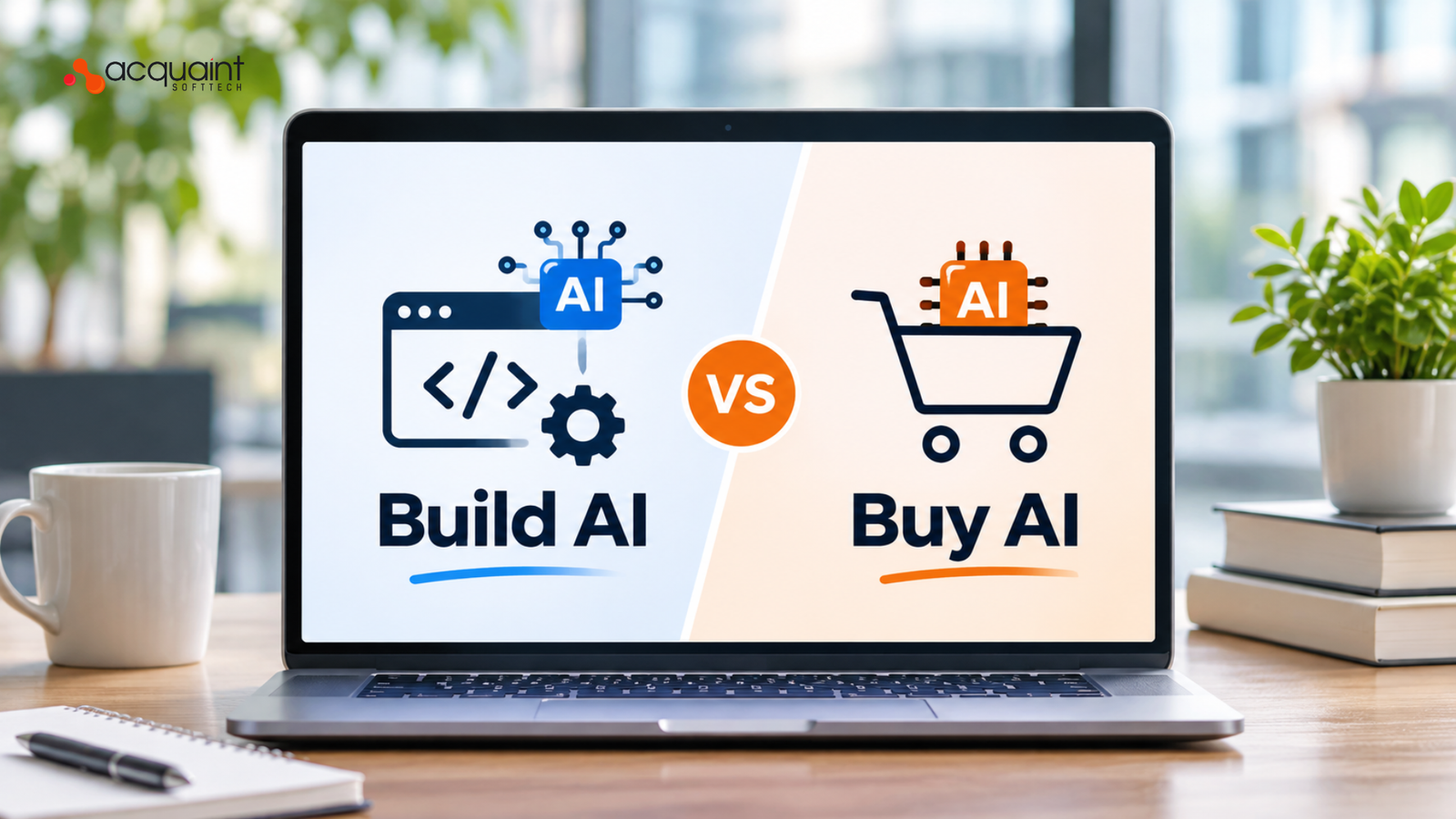
An off-the-rack suit fits most people well enough, costs less and is ready today. A tailored suit costs more and takes time, but it fits one person exactly and lasts. The build vs buy AI decision works the same way. Most businesses should start with AI products they can buy, and invest in custom AI solutions only where an exact fit with their own data, workflows or customers creates real value.
In short, buy AI software when the task is common across companies, such as drafting text, transcribing meetings or answering routine questions. Build custom AI when the task depends on your proprietary data, is central to how you compete, or needs integration and control that products cannot offer. Evidence favours starting with proven tools: MIT’s NANDA initiative reported in its 2025 study, The GenAI Divide, that AI tools bought from specialised vendors or built with partners succeeded about 67% of the time, while internal builds succeeded only about one-third as often.
The guidance reflects how Acquaint Softtech helps companies make this decision as an ISO 27001-certified technology partner, drawing on 1,300+ projects and 70+ in-house engineers serving clients in the USA, UK, Europe, and Australia.
Should you build or buy AI software?
Buy first, build selectively. Off-the-shelf AI is faster to adopt and cheaper to start with, and it improves as the vendor updates it. Custom AI is worth the cost when generic products cannot reach the accuracy, integration or ownership your use case needs, and when the result gives you an advantage competitors cannot simply purchase.
The two are not mutually exclusive. Most organisations end up with a mix: bought tools for general productivity, and a small number of custom systems for the processes that make them different.
Build, buy or blend: the three options
| Option | What it means | Best when |
| Buy | Subscribe to a ready-made AI product | The task is common and speed matters |
| Blend | Build a custom layer on top of existing AI models or products | You need your data and workflows, without training models |
| Build | Develop a custom AI system, sometimes with your own trained models | The capability is core to your business |
The blend option is the most common route to custom AI today. Rather than training models from scratch, teams connect existing large language models to company data and systems, for example through retrieval-augmented generation (RAG), and wrap them in their own interface, rules, and approvals. Specialist AI application development teams typically build these as web or mobile apps, or as AI features inside software a company already uses.
When buying AI makes sense
Buying is usually the right choice when:
• The task is generic, such as writing assistance, meeting notes or translation.
• You need results within weeks, not months.
• A product already integrates with the tools your team uses.
• The process is not a source of competitive advantage.
• You do not have, or do not want, an engineering team to maintain an AI system.
Check vendor terms before rolling out: how your data is stored and used, whether it can be used to train the vendor’s models, and what happens to it if you cancel.
When custom AI is worth the cost
1. Your data is the advantage
If answers depend on your contracts, product catalogue, case history or customer records, a generic tool cannot match a system grounded in that data.
2. The process is core to how you compete
Pricing logic, underwriting rules or a unique service model are worth owning rather than renting from a vendor that also serves your competitors.
3. Products cannot integrate deeply enough
When AI must read from and write to several internal systems, follow approval steps or respect detailed permissions, custom integration is often unavoidable.
4. Compliance or data residency rules apply
Regulated industries may need specific hosting, audit trails or data handling that off-the-shelf products do not offer.
5. Per-user pricing stops making sense
At large scale, subscription costs for many seats or high usage can exceed the cost of running a focused custom system.
6. You need control over the roadmap
If vendor changes to features, pricing or models would disrupt your operations, owning the system reduces that dependency.
Comparing total cost and control
| Factor | Buy | Build or blend |
| Upfront cost | Low | Higher, project-based |
| Time to value | Days to weeks | Weeks to months |
| Ongoing cost | Subscriptions that grow with users | Hosting, model usage and maintenance |
| Fit to your process | Generic | Exact |
| Control and ownership | Vendor decides | You decide |
| Maintenance burden | Handled by vendor | Your team or partner |
Compare costs over at least two to three years, not just the first invoice. Include integration work, staff time, security reviews and the cost of switching if a vendor changes direction.
Read Also: Technology and Global Regulation
A simple build vs buy decision test
Answer these five questions for each AI use case:
- Is the task common across companies, or specific to ours?
- Does the value depend on our own data?
- Would losing this tool, or a vendor price rise, seriously disrupt us?
- Do compliance, security or integration needs rule out available products?
- Will the total cost of a product exceed a custom build within three years?
Mostly “no” answers point to buying. Mostly “yes” answers point to building or blending, ideally starting with a small proof of concept. If the answers are mixed, an independent AI consulting review can rank use cases by value and feasibility before any money is committed.
Making the call
Most people buy most of their clothes off the rack and save tailoring for the occasions that matter. Treat AI the same way. Buy proven tools for everyday tasks, keep an eye on data terms and total cost, and invest in custom AI only where your data, processes or compliance needs make an exact fit worth paying for. That mix delivers value quickly without locking you into the wrong choice.
FAQs
Should I build or buy AI software?
Buy for common tasks and speed; build or blend when the use case depends on your own data, is core to your business or needs integration products cannot provide.
When is custom AI worth the cost?
When it creates an advantage competitors cannot buy, meets compliance needs or costs less than scaled subscriptions over a few years.
What is the difference between off-the-shelf AI and custom AI?
Off-the-shelf AI is a ready-made product for general tasks; custom AI is designed around your data, workflows and rules.
Do I need to train my own model to build custom AI?
Usually not. Most custom AI connects existing models to your data and systems rather than training new models from scratch.